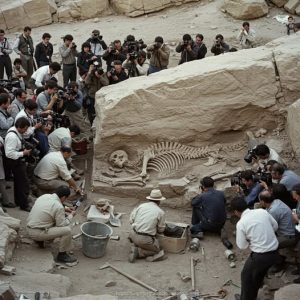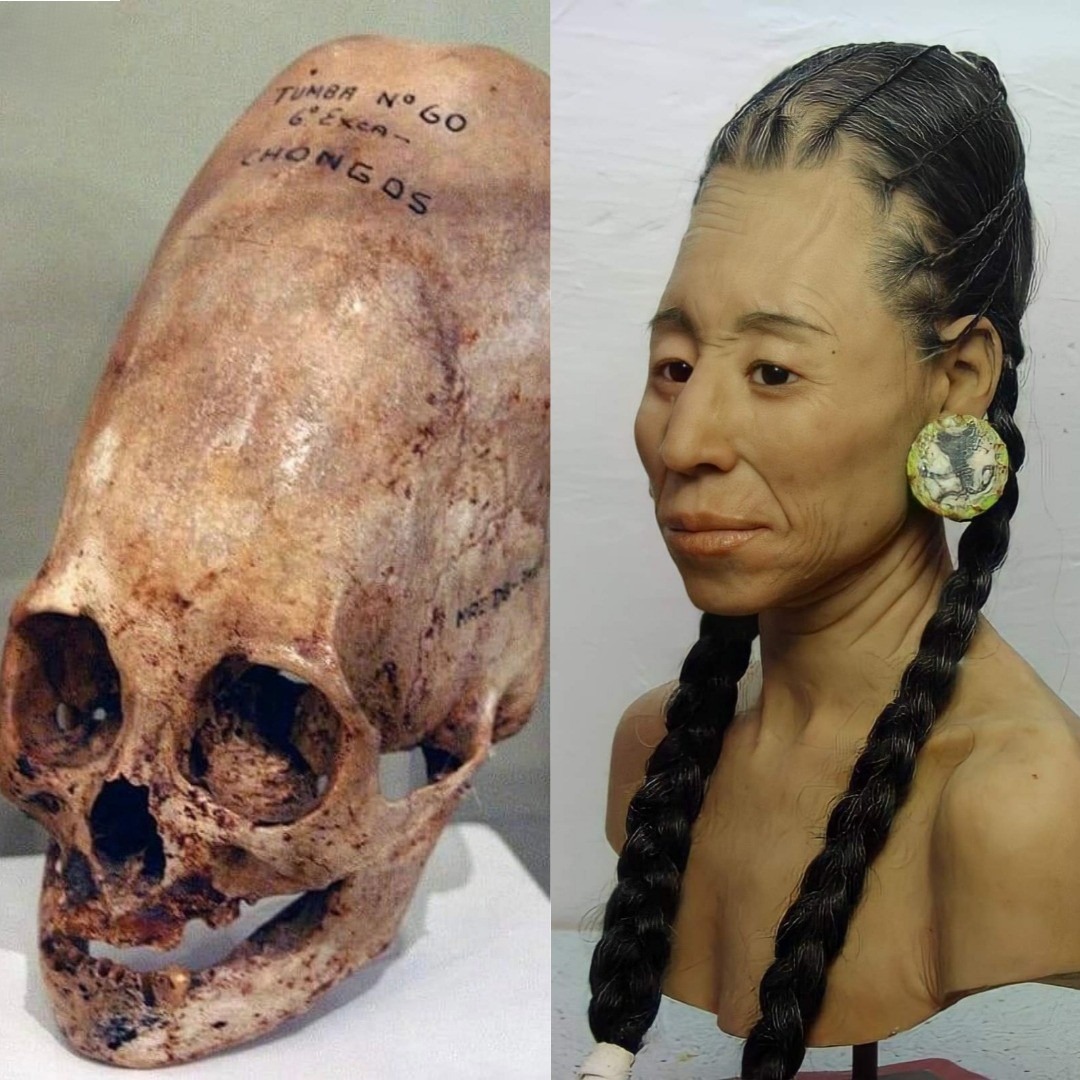
In 1928, archaeologists made a groundbreaking discovery on Peru’s Paracas Peninsula: a vast necropolis containing hundreds of burials from the Paracas civilization, which flourished between approximately 800 and 100 BCE. Among the most remarkable finds were the elongated skulls, some of which were deliberately modified from infancy using cloth bindings or wooden boards. These cranial alterations provide an extraordinary window into the cultural, spiritual, and social practices of a society that placed deep importance on identity, hierarchy, and ritual.
The Significance of Cranial Modification
The elongated skulls of the Paracas people are not merely curiosities—they are a testament to intentional human modification and cultural expression. Anthropologists believe that shaping the skulls from a young age served multiple purposes. Some researchers suggest that cranial elongation signified social status or elite lineage, marking individuals as members of a privileged or ruling class. Others propose a spiritual or religious rationale, wherein the modified skulls were believed to enhance spiritual connection, intelligence, or beauty according to the values of the Paracas culture.
The process was carefully executed, involving gradual reshaping over months or years to ensure that the skull achieved the desired form without causing severe harm. This practice reflects an advanced understanding of anatomy, patience, and cultural sophistication, highlighting how deeply the Paracas invested in controlling both their physical and social environments.
Accompanying Artifacts
The elongated skulls were often interred alongside exquisite textiles, ceremonial headdresses, and other artifacts preserved by the arid desert climate. The textiles, in particular, are celebrated for their intricate designs, vibrant colors, and symbolic motifs, suggesting a culture with a rich artistic tradition and advanced weaving techniques. Combined with the cranial modifications, these artifacts illuminate the Paracas civilization’s aesthetic sensibilities, ritual practices, and societal organization.
The meticulous preservation of the burial sites allows modern researchers to study not only the physical modifications but also the broader cultural and ceremonial context in which they occurred. Every textile, adornment, and grave arrangement contributes to a more comprehensive understanding of Paracas beliefs, social structure, and artistry.
Cultural and Historical Insights
The Paracas elongated skulls underscore the civilization’s focus on social stratification, spirituality, and identity. They demonstrate how body modification can serve as both a personal and cultural statement, encoding values, hierarchy, and belief systems in physical form. The practice challenges modern perceptions of ancient societies, revealing a people capable of deliberate, symbolic, and technically complex interventions on the human body.
Moreover, these finds have global significance, contributing to discussions about human diversity, cultural innovation, and the universality of ritualized body modification across civilizations. They provide tangible evidence that ancient cultures shaped their world—and themselves—with profound intentionality and symbolic purpose.
Conclusion
The Paracas necropolis and its elongated skulls offer an extraordinary glimpse into a civilization that reshaped not only their social structures but also the bodies of their children. Preserved alongside intricate textiles and ceremonial artifacts, these skulls reveal a culture deeply invested in hierarchy, spirituality, and aesthetic expression. The Paracas mystery continues to inspire fascination, highlighting the ingenuity, ritual sophistication, and enduring legacy of an ancient civilization that left an indelible mark on human history.