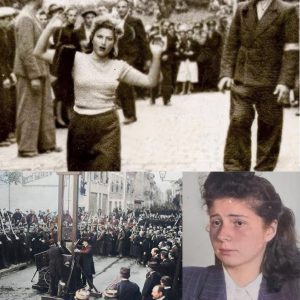
CONTENT WARNING: This post examines the indoctrination of German youth under National Socialism and the actions of one individual in the final months of WWII. The topic involves Nazi ideology and post-war violence. Purpose: historical education only.

Born on May 21, 1922, in Hamm, Westphalia, Ilse Hirsch grew up during a period of intense Nazi indoctrination efforts targeted at German youth.
At age 10, she witnessed Adolf Hitler becoming Chancellor. By age 16, she had joined the League of German Girls (BDM), the female counterpart to the Hitler Youth. Like many young people at the time, she was exposed to teachings emphasizing loyalty to the leader, racial ideologies, physical training, and preparation for roles in service to the state. By 1939, participation in such organizations became mandatory, with non-compliance potentially leading to scrutiny of families.
As the war shifted against Germany in late 1944, the regime established a secret resistance operation known as Unternehmen Werewolf (Operation Werewolf), aimed at conducting sabotage and targeted actions behind Allied lines post-surrender.
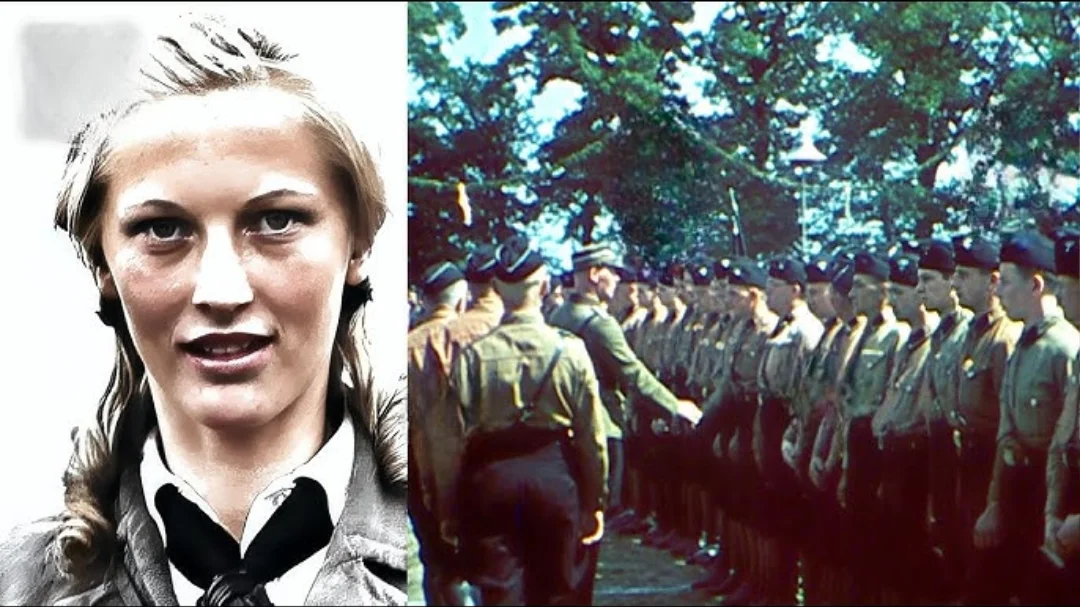
At age 22, Hirsch was among a small number of women recruited for this. She underwent training in explosives, firearms, and irregular warfare at a covert facility near Koblenz and was assigned to a six-member team called “Group East.”
On the night of March 21–22, 1945, the team parachuted into the Eifel region near the Belgian border. Their objective was Dr. Franz Oppenhoff, an anti-Nazi mayor installed by U.S. forces in the liberated city of Aachen.
On March 25, 1945, posing as Belgian refugees, the group approached Oppenhoff’s residence. Hirsch served as a lookout while others gained entry by singing a folk song. When Oppenhoff appeared, he was fatally shot at close range. The group escaped, vocalizing a Nazi salute.
This incident, the first confirmed success of the Werewolf operation, alarmed Allied forces and was highlighted as evidence of persisting Nazi extremism.
During their retreat to German lines, Hirsch sustained a severe injury from a landmine, losing part of her foot. Captured by U.S. troops, she and the remaining team members faced a military tribunal in 1946–47. Sentences varied from two to four years; Hirsch’s was comparatively lenient, considering her age and the extent of her indoctrination.
Following her imprisonment, she faded from public records, with limited information available about her subsequent life.
Hirsch’s experiences illustrate not just personal actions but the broader impact of systematic propaganda, mandatory youth programs, and enforced obedience under a totalitarian system. It underscores the human consequences when ideology supplants individual judgment.
Sources:
- Perry Biddiscombe, Werewolf! The History of the Nazi Resistance Movement 1944–1946
- German Federal Archives – Werewolf trial records
- Aachen city archives – Franz Oppenhoff assassination file