Re: APOD: NGC 6960: The Witch’s Broom Nebula (2025 Oct 01)
Well, sigh. Once again, I’m not enthusiastic about today’s APOD.
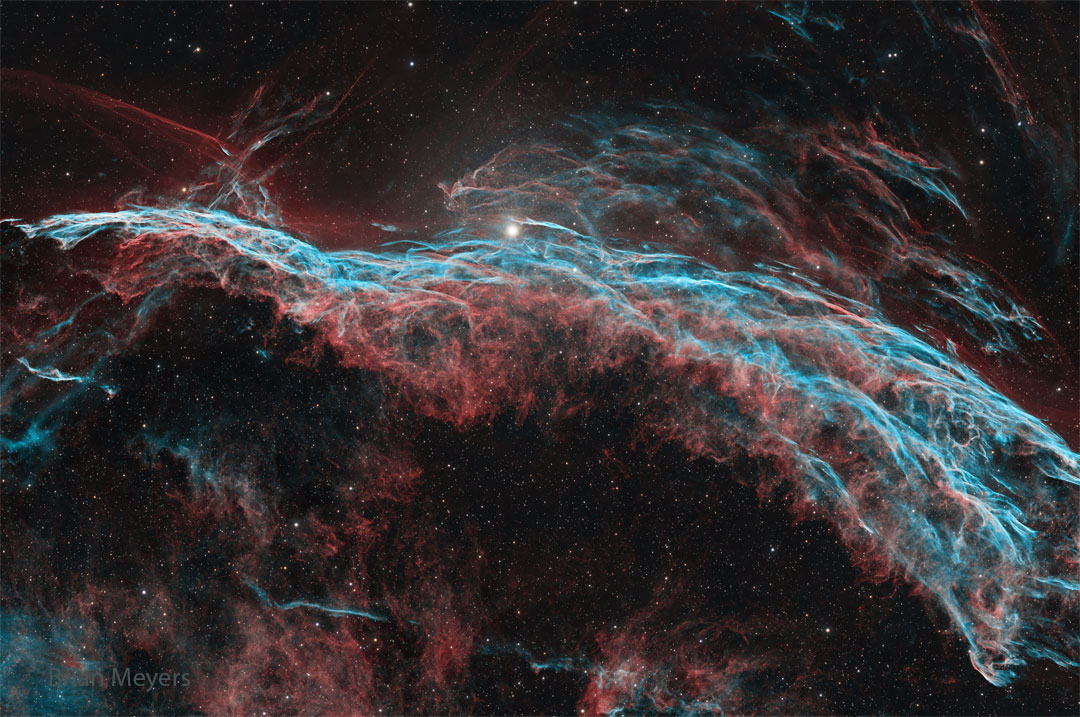
The problem is not today’s image in itself. The problem is that I have never much liked the Veil Nebula in the first place, because of my own personal quirks and preferences. But okay, let me try to explain a little. I so much prefer the Vela Supernova Remnant over the Veil Nebula:

Take a look at what these two supernova remnants look like widefield:

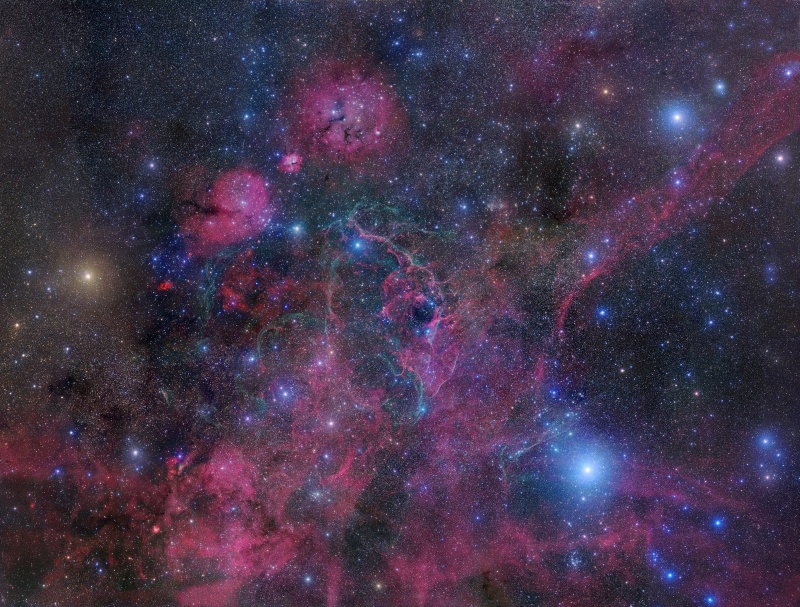
So the Veil Nebula is surrounded by blackness and emptiness. The Vela Supernova Remnant is surrounded by brilliant blue and yellow stars, red emission nebulas and star formation. So when you look at the Veil nebula, you get the Veil Nebula and nothing else. But when you look at the Vela Supernova Remnant, you get a treasure trove of cosmic gems – particularly if you are lucky enough to get an RGB image of this amazing field in stunning color! You’ve got star death and star birth and star brilliance in the same breathtaking cosmic roller coaster!
But as I said, I can’t gush over today’s APOD, sorry, because of my personal quirks and preferences. But at the very least, I can say something about the star that created the Veil Nebula in the first place, at least if we are going to take Wikipedia’s words for it!
Wikipedia wrote about the Veil Nebula:
It constitutes the visible portions of the Cygnus Loop, a supernova remnant, many portions of which have acquired their own individual names and catalogue identifiers.
The source supernova was a star 20 times more massive than the Sun which exploded between 10,000 and 20,000 years ago.
Well, fascinating! 20 times more massive than the Sun is a lot for a star at the moment of going supernova, because all massive stars lose mass during their lifetime. So the Veil Nebula progenitor would have been a lot more massive in its prime, during its supergiant lifetime, and particularly during its main sequence lifetime. Perhaps it was similar to Alnilam before it exploded?
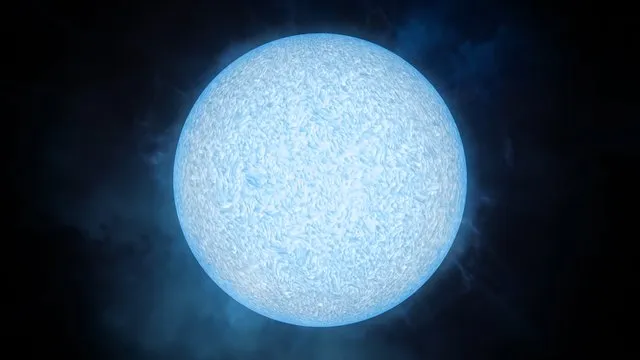
The mass of Alnilam is ~28 solar masses, according to Wikipedia. Sounds just right for a Veil Nebula progenitor analog!
Let’s return to the Wikipedia wisdom of the star that created the Veil Nebula:
At the time of the explosion, the supernova would have appeared brighter than Venus in the sky, and visible in the daytime.
Cool! I was searching for a picture that would compare the brightness of Venus with the brightness of a luminous supernova, but I was unsuccessful. So let’s just look at a picture of Venus and Jupiter together in the sky, and let’s imagine that one of them was a supernova:
There is one more Wikipedia tidbit about the Vela Supernova Remnant:
The Vela Supernova Remnant is a supernova remnant in the southern constellation Vela. Its source Type II supernova exploded approximately 11,000 years ago (and was about 900 light-years away). The association of the Vela supernova remnant with the Vela Pulsar, made by astronomers at the University of Sydney in 1968, was direct observational evidence that supernovae form neutron stars.