👑 Kubaba of Kish: The Tavern Keeper Who Became the World’s First Recorded Queen
Over four thousand years ago, long before the rise of Egypt’s Cleopatra or Britain’s Elizabeth I, a woman from the ancient city of Kish—in what is now modern-day Iraq—rose from humble beginnings to seize the throne. Her name was Kubaba, and history remembers her as the first recorded female ruler in the world.
Her story appears in one of the oldest written documents known to humankind: the Sumerian King List, a clay tablet inscribed in cuneiform that recounts generations of Mesopotamian kings who ruled after the mythical flood. Among these male monarchs—some said to have ruled for centuries—one name stands out for its singularity and defiance of convention: Kubaba, the woman tavern keeper, who made firm the foundations of Kish.

From Alehouse to Throne
In the bustling trade city of Kish, taverns were not merely drinking establishments. They were social crossroads — places where merchants, officials, and travelers exchanged news, stories, and power. It was here, historians believe, that Kubaba’s journey began. As a tavern keeper, she would have interacted with people from all levels of society, learning not only the art of negotiation but also the fragile balance of politics in one of the earliest organized city-states.
Though the exact details of her rise are lost to time, ancient sources agree that Kubaba’s rule marked a period of stability and prosperity. The King List credits her with “making firm the foundations of Kish,” implying she strengthened the city’s political and religious institutions. Some scholars believe she may have taken power during a time of crisis, uniting factions through diplomacy—or possibly through divine endorsement.
The Queen Who Defied the Gods’ Order
To the Sumerians, kingship was not merely a political office—it was a divine mandate, “descended from heaven.” For a woman to assume this sacred role was extraordinary, even revolutionary. Yet Kubaba ruled for what the text describes as one hundred years, suggesting that her reign, whether literal or symbolic, left a profound and lasting impression.
In a world where women were rarely acknowledged as leaders, Kubaba’s name became synonymous with wisdom and authority. Later traditions continued to honor her, and her legend began to transcend the mortal realm.
From Queen to Goddess
Centuries after her reign, the name Kubaba (or Kybebe, later Cybele) reappears in Anatolia—modern-day Turkey—this time as the name of a mother goddess worshiped by the Phrygians and Lydians. In temple inscriptions and sacred hymns, Kubaba was revered as a divine protectress, associated with fertility, mountains, and wild nature.
This transformation from ruler to deity remains one of the most fascinating evolutions in mythic memory. Historians debate whether the Anatolian goddess directly descends from the historical queen of Kish, or whether the name was reinterpreted through cultural exchange between Mesopotamia and Anatolia. Yet the continuity of her name and her enduring themes—strength, creation, protection—suggest a symbolic immortality that few mortals ever achieve.
Legacy of the First Queen
Kubaba’s reign challenges our understanding of ancient gender roles. In an age when most rulers were male warrior-kings, she demonstrated that leadership could emerge from intellect, charisma, and community strength rather than bloodline or conquest. Her story bridges the divide between myth and history, showing how individual lives can ripple through millennia, shaping belief systems and inspiring civilizations long after their cities have crumbled to dust.
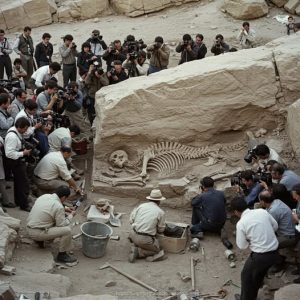
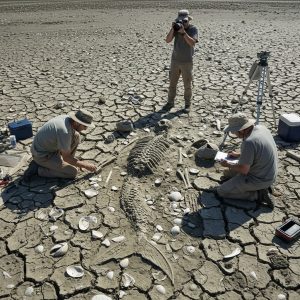
Today, archaeologists continue to uncover artifacts from Kish — cylinder seals, temple foundations, and cuneiform tablets — each offering glimpses into the world Kubaba once ruled. Her name still echoes across disciplines: in archaeology, in mythology, and in feminist historiography, where she stands as both a historical pioneer and a symbol of timeless power.
From serving ale to ruling a kingdom, Kubaba’s journey remains one of humanity’s earliest and most extraordinary tales of transformation—a reminder that history is often written not just by kings, but by those bold enough to challenge the order of their time.
📍 Kish – Ancient Sumer (Iraq)
#History #AncientHistory #WorldHistory #Archaeology #LostCivilizations #DidYouKnow #HistoricalFacts #ExploreHistory #HistoryLovers